Ion exchange
Water softeners
How ion-exchange softening actually works, which North Carolina cities need it, and which two cities don't. Plus verified customer reviews.
How it actually works
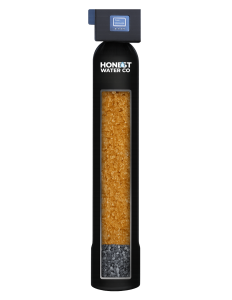
A softener is a resin tank and a control valve. Water passes through a bed of resin beads carrying sodium ions; calcium and magnesium have a stronger affinity for the resin, so they swap places with the sodium and stay behind. What comes out the other side has no hardness minerals in it.
The resin eventually saturates, so the valve periodically flushes the bed with concentrated brine, stripping the accumulated hardness to drain and recharging the resin with sodium. That regeneration cycle is the whole reason a softener needs salt, and why it needs a drain line.
Everything else is sizing. Capacity is a function of your hardness, your household's water use, and how often you are willing to regenerate. Undersize it and you get hard water breakthrough between cycles; oversize it and you waste salt and water.
Where a softener genuinely earns its place
Anywhere above roughly 7 grains per gallon. In our service area that is Wake Forest at 8–12 GPG, Raleigh at 7–10, and Cary and Apex at 7–9. At those levels scale accumulates measurably in water heaters and dishwashers, soap consumption goes up, and glassware spots. Durham and Chapel Hill at 6–9 GPG sit at the threshold where it becomes a comfort decision rather than an equipment-protection one.
Where you don't need one
Charlotte and Wilmington. Charlotte's Catawba supply runs 1–4 GPG and Wilmington's is about 2.9 GPG — both already soft. A softener in either city is solving a problem you do not have. What those cities actually have is a disinfection byproduct question, which is a carbon and RO conversation, not a softener one. We would rather say that plainly than sell a tank that does nothing.
Customer reviews
No reviews tagged to this system yet.
Common questions
- How much salt does a softener use?
- It depends on hardness and water use, but a typical Triangle household at 8–10 GPG runs somewhere around 40–50 lbs a month. Higher hardness and higher usage push that up.
- Does a softener remove chlorine, PFAS or iron?
- No to chlorine and PFAS — those need carbon and reverse osmosis respectively. Small amounts of dissolved iron can be removed incidentally, but meaningful iron or sulfur needs dedicated oxidation and filtration, not a softener.
- Salt-free conditioners — do they work?
- They do something real, but it is not softening. They alter how hardness minerals crystallise so they are less likely to adhere to surfaces, which helps with scale. They do not remove hardness, so soap lathering, spotting and skin feel are unchanged. Both products are legitimate; the marketing that conflates them is not.
- How long does a softener last?
- Resin typically lasts 10–15 years. Control valves and circuit boards are the parts that wear. Media generally needs replacing on a 3–5 year interval depending on water conditions.
Water softeners installed
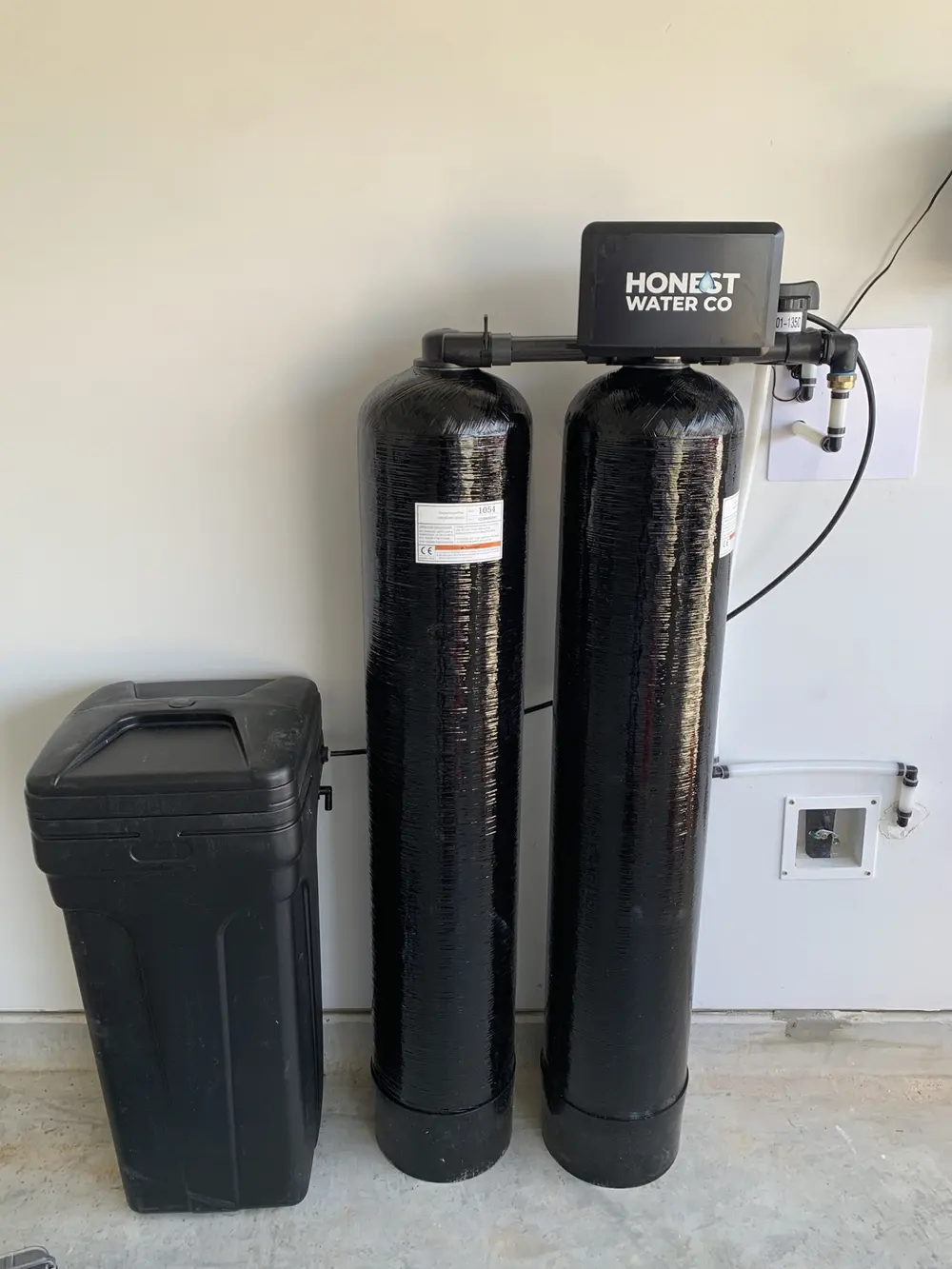
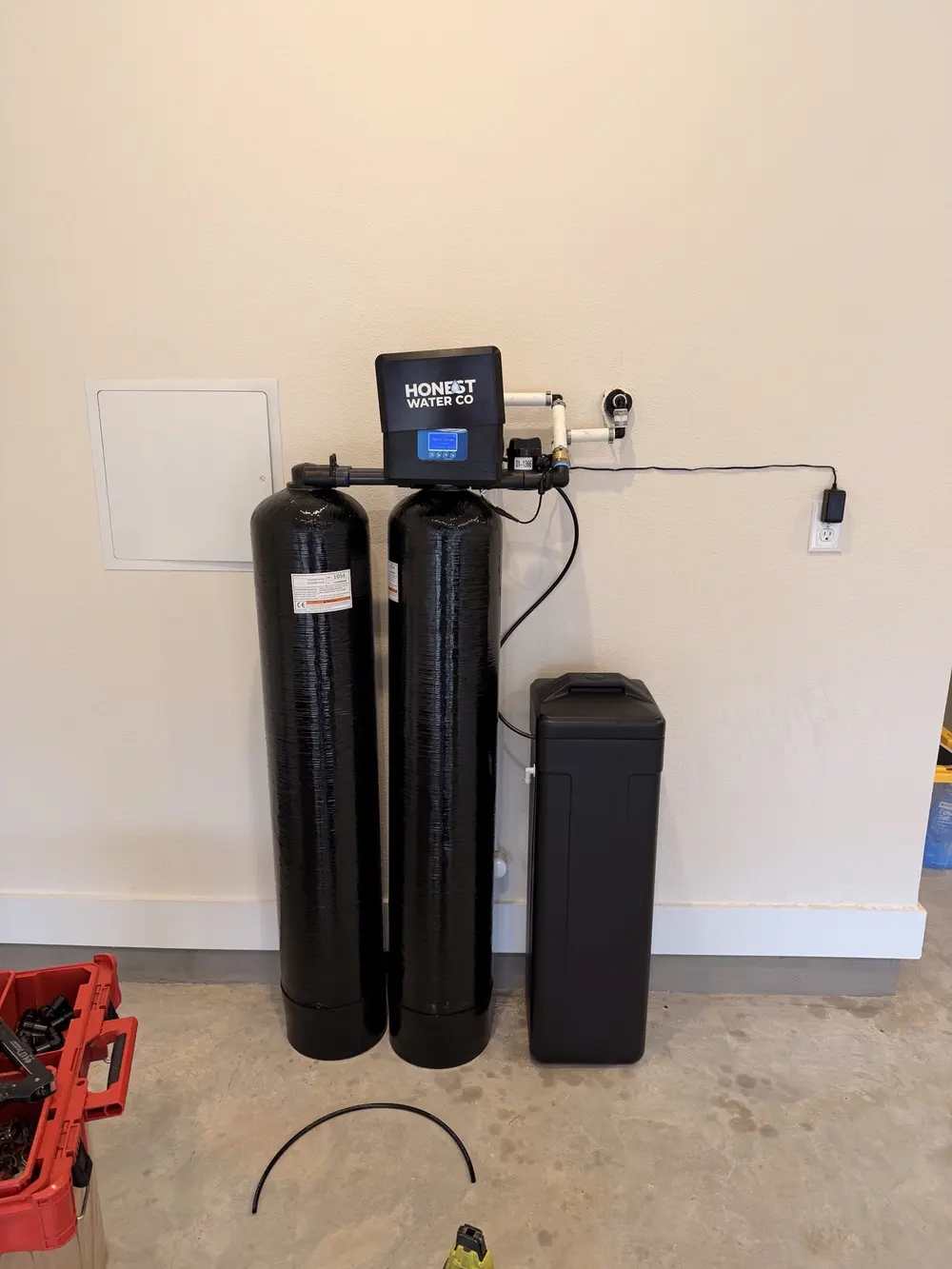
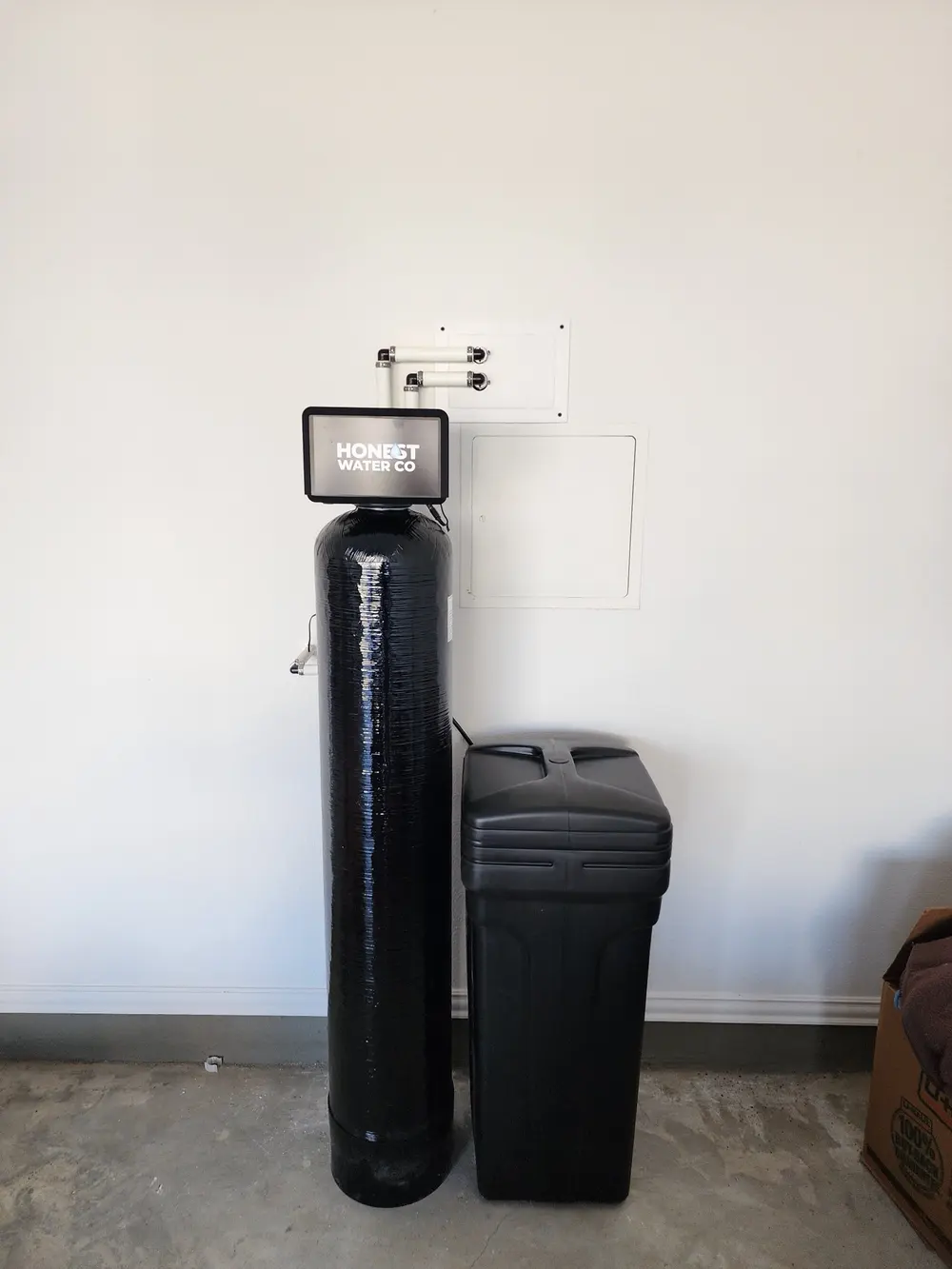
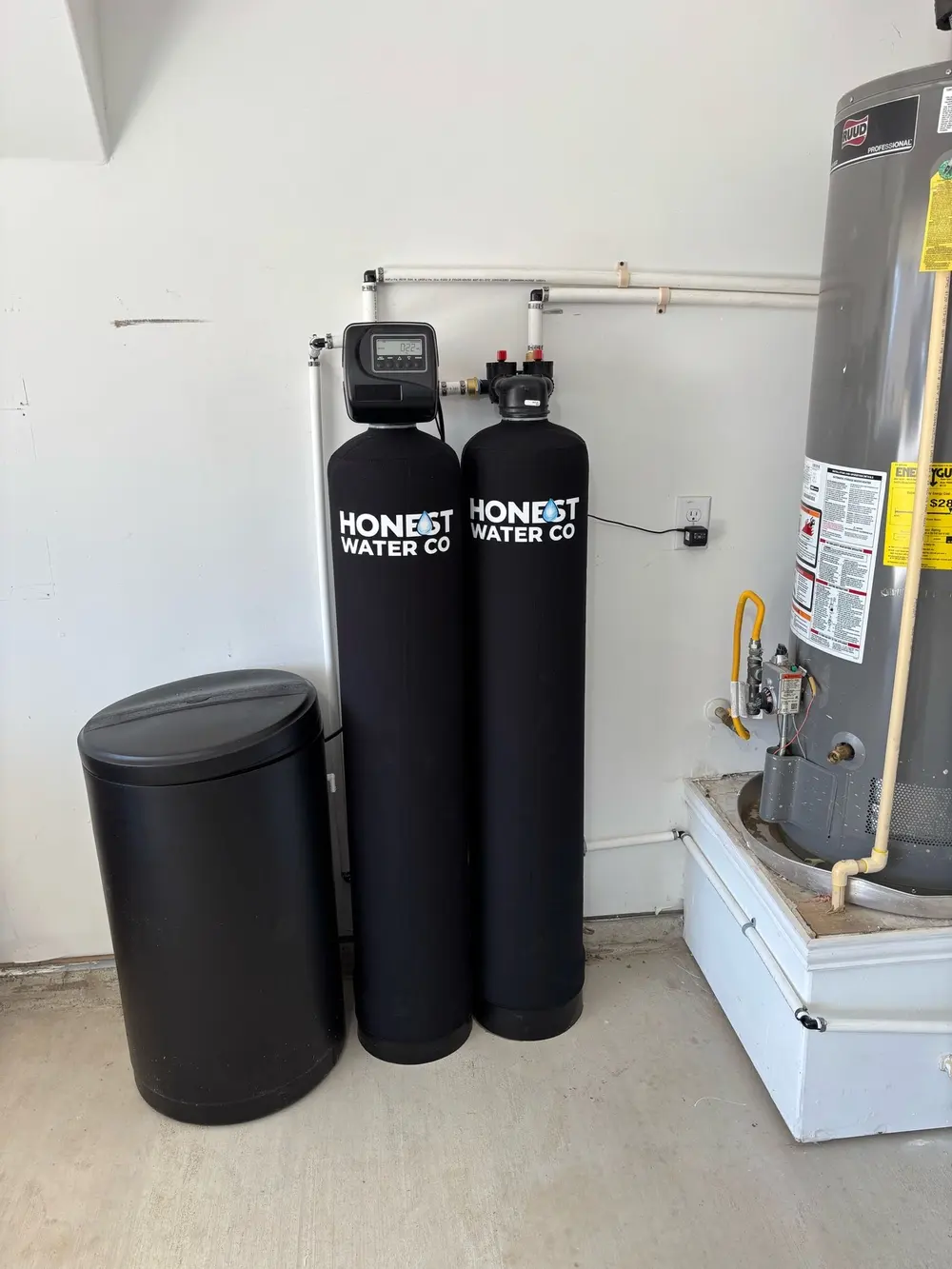
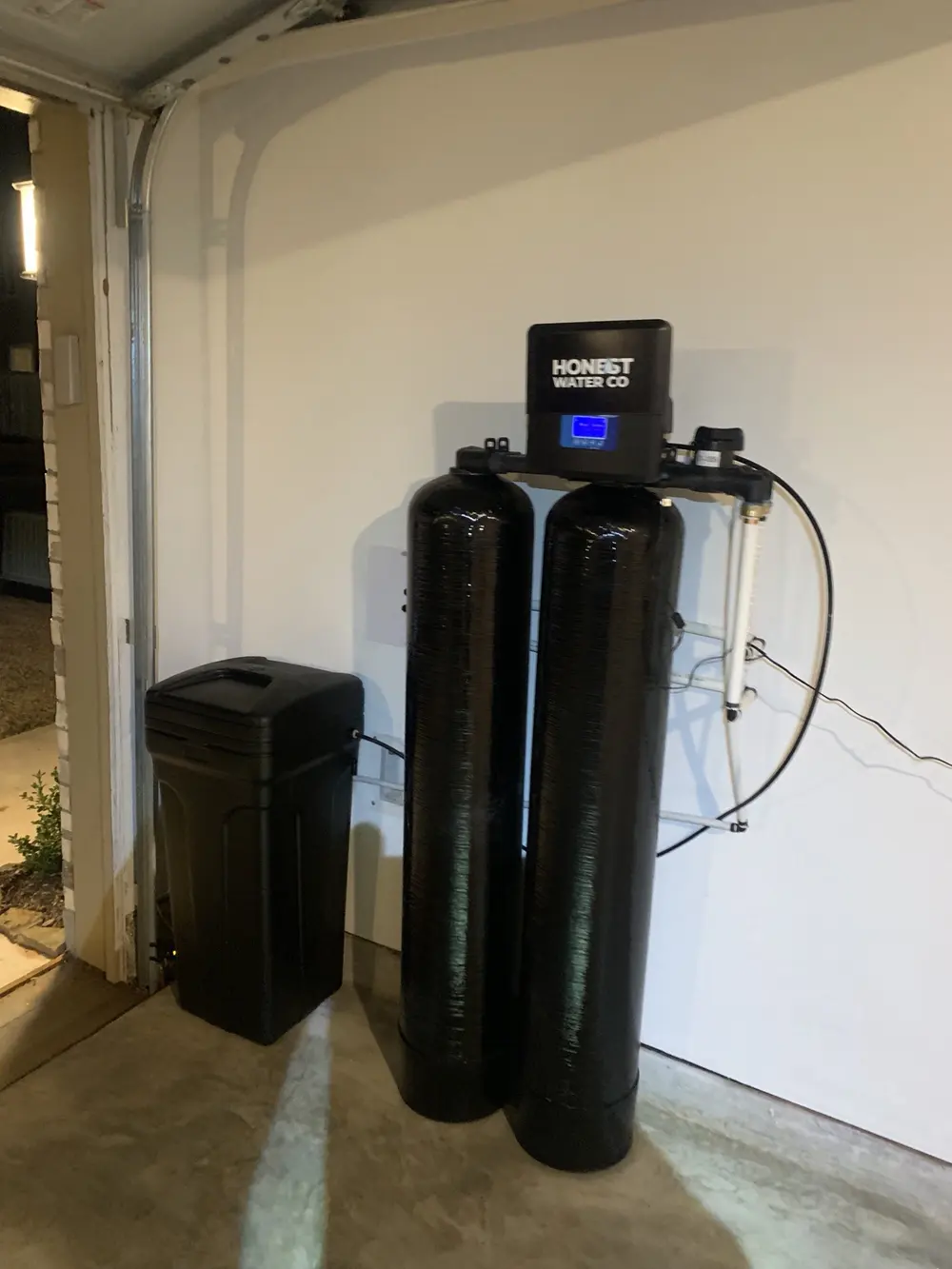
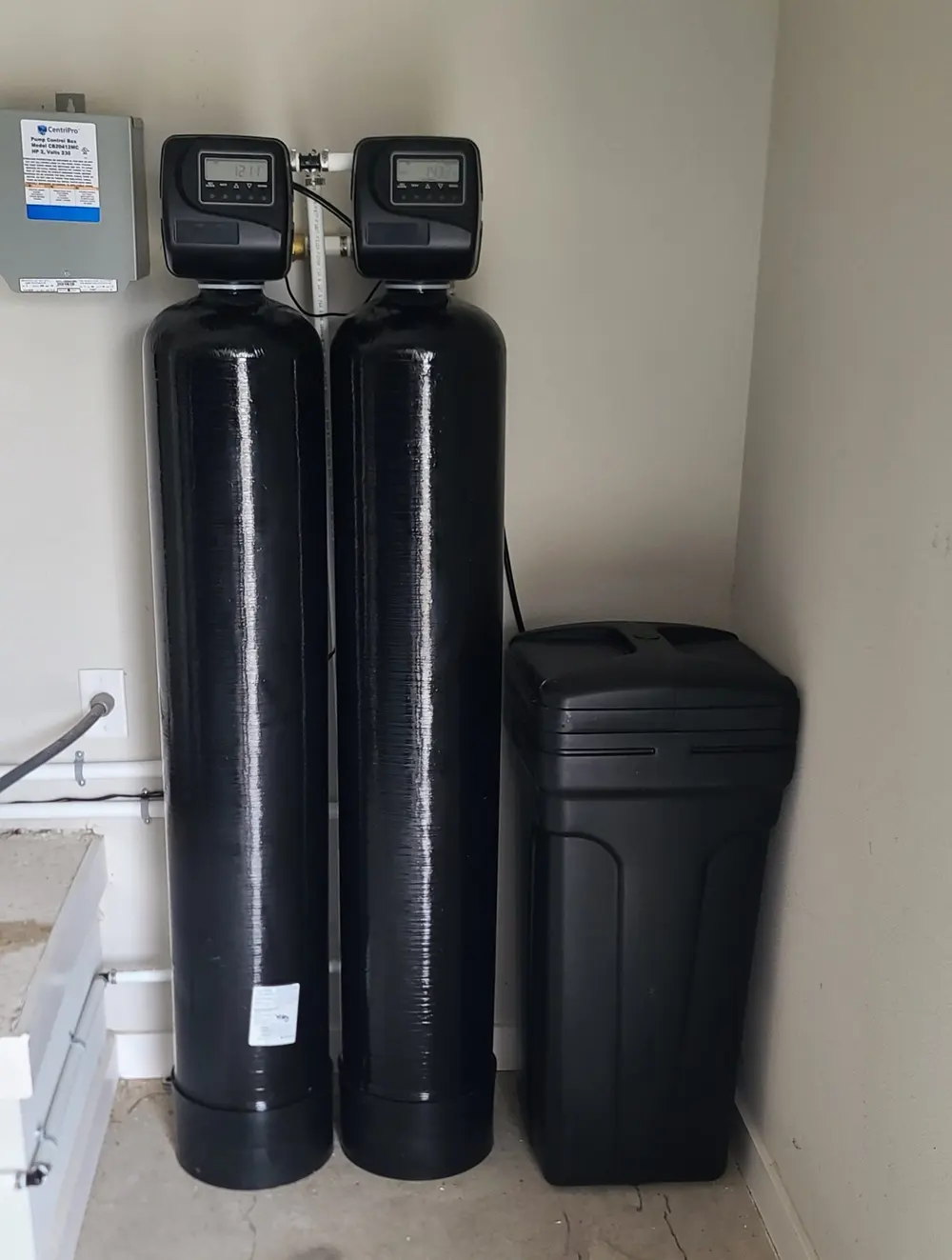
Installation photos from across the Honest Water Co franchise network, including our Texas locations — same equipment line, same training, same warranty. These are not photos of specific North Carolina jobs.
Ready for better water?
Get a free in-home water test and quote from the Honest Water NC team.
Get a free quoteOr call (984) 206-3774